Carpet has taken its share of criticism over the years. Hard-surface flooring has dominated design conversations, social media feeds, and new-construction trends for the better part of a decade, and somewhere along the way, carpet developed a reputation for being dated, difficult to maintain, or simply out of step with modern home design. That reputation isn't entirely fair, and for contractors and builders who write it off completely, it may actually be costing them on the job.
The reality is that carpet is not going anywhere. It remains one of the most practical, comfortable, and cost-effective flooring solutions available for specific spaces and applications. Knowing when and where to recommend it is a mark of a builder who understands the full picture, not just the trends.
At C.S. Brown, we carry a full selection of carpet alongside our tile, stone, and hardwood lines because we know that the right project calls for the right material. This guide breaks down exactly where carpet still makes sense and why builders who dismiss it entirely may be missing an opportunity.
There is a reason carpet has been a staple in bedrooms and living spaces for generations, and it has nothing to do with aesthetics. Carpet provides a level of warmth and softness underfoot that no hard surface flooring can replicate. For homeowners who value comfort in their personal spaces, particularly bedrooms, this matters more than most builders give it credit for.
In colder climates or homes without radiant heating, stepping onto a cold tile or hardwood floor first thing in the morning is a genuine daily frustration for many homeowners. Carpet eliminates that issue entirely. It retains warmth in a way that hard surfaces simply do not, and that comfort factor is something clients feel every single day they live in the home you built for them.
When a client walks through a beautifully finished bedroom with plush carpet, the sensory experience is immediate and positive. That feeling translates directly into satisfaction with the finished product and confidence in the builder who made the recommendation.
One of the strongest arguments for carpet in certain spaces is its acoustic performance. Carpet absorbs sound in a way that hard-surface flooring fundamentally cannot. This matters significantly in multi-story homes, where footstep noise traveling between floors is one of the most common complaints builders hear after move-in.
Installing carpet in upstairs bedrooms and hallways dramatically reduces the amount of sound transmitted to the floor below. For families with young children, light sleepers, or home offices situated beneath living areas, this is not a minor detail. It is a quality-of-life consideration that clients notice and appreciate every day.
Carpet also reduces echo and ambient noise within a room. Open floor plans with hard surface flooring throughout can create acoustically harsh environments where sound bounces and amplifies. Introducing carpet in strategic spaces softens a home's acoustic profile in a way that no number of area rugs can fully replicate.
For builders working on multi-unit residential projects, the acoustic benefits of carpet are even more significant. Reducing sound transmission between units is both a quality concern and, in many cases, a building code consideration. Carpet is one of the most effective and cost-effective options for meeting those requirements.
Budget conversations are a reality on every project, and carpet gives builders a genuinely useful tool for managing costs without sacrificing the overall quality of the finished home. Carpet is typically less expensive per square foot than hardwood, stone, or premium tile, and it installs quickly with relatively straightforward labor requirements.
On projects where the overall flooring budget is stretched across a large square footage, using carpet strategically in bedrooms and secondary spaces frees up budget to invest in higher-end hard surface materials in the areas that make the strongest visual impression: entry foyers, kitchens, living rooms, and main hallways. This approach allows builders to deliver a home that feels premium throughout without overextending the flooring budget in spaces where the return on investment is lower.
For clients on a tighter budget who still want a finished, quality home, carpet in bedrooms is often the right recommendation. It delivers comfort and functionality at a price point that keeps the project on track.
Understanding the right applications for carpet is what separates a thoughtful recommendation from a dated one. Carpet is not the right choice everywhere, but in the following spaces, it consistently outperforms the alternatives.
Bedrooms are the strongest application for carpet in residential construction. The space is low-traffic, moisture exposure is minimal, and comfort is the primary priority. Carpet delivers warmth, softness, and a quiet underfoot experience that contributes directly to the restful quality of a sleeping space. For master suites, a well-chosen carpet can also add a sense of luxury and softness that complements the room's high-end finishes.
Bonus rooms, playrooms, home theaters, and finished basement living areas are excellent candidates for carpet. These spaces are often used for lounging, recreation, and family activities, where hard-surface flooring can feel cold and unforgiving. Carpet makes these spaces more inviting and functional, and the lower traffic levels relative to the main living areas reduce maintenance concerns.
Home theaters in particular benefit significantly from carpet. The acoustic absorption properties of carpet improve sound quality in the room by reducing reflections and creating a more immersive listening experience. Many dedicated home theater designers specify carpet as a functional requirement rather than a stylistic one.
Stairs are one of the most practical applications for carpet in a home. Carpet on stairs reduces noise, improves traction and safety, and softens what would otherwise be the loudest traffic pathway in the house. For families with young children or elderly residents, the safety benefits of carpeted stairs are meaningful and worth communicating to clients.
Upper-floor hallways serve as connectors between bedrooms and benefit from the same acoustic properties as the rooms they lead to. Carpeted hallways on upper floors significantly reduce the sound of foot traffic traveling through the home, which is particularly valuable in households with varying sleep schedules.
Finished basements present a unique flooring challenge. Concrete subfloors are cold, and the below-grade environment can feel unwelcoming without the right flooring choice. Carpet transforms a finished basement into a genuinely comfortable living space, adding warmth and softness that make the space feel like a true extension of the home rather than an afterthought.
For basement applications, selecting carpet with an appropriate moisture-resistant backing is an important product specification. Not all carpet products are suited for below-grade environments, and guiding clients toward the right product for the application is part of the value a knowledgeable supplier brings to the project.
Part of what has driven the perception that carpet is outdated is simply that many people's frame of reference is older carpet products that genuinely did not perform well. Modern carpet manufacturing has advanced significantly. Today's products offer far better stain resistance, durability, and longevity than the carpets of previous decades.
Stain-resistant treatments are now standard on many product lines, making modern carpet far more forgiving of spills and everyday messes than its predecessors. Fiber technology has improved as well, with options like solution-dyed nylon and triexta delivering performance characteristics that hold up well even in moderately active households.
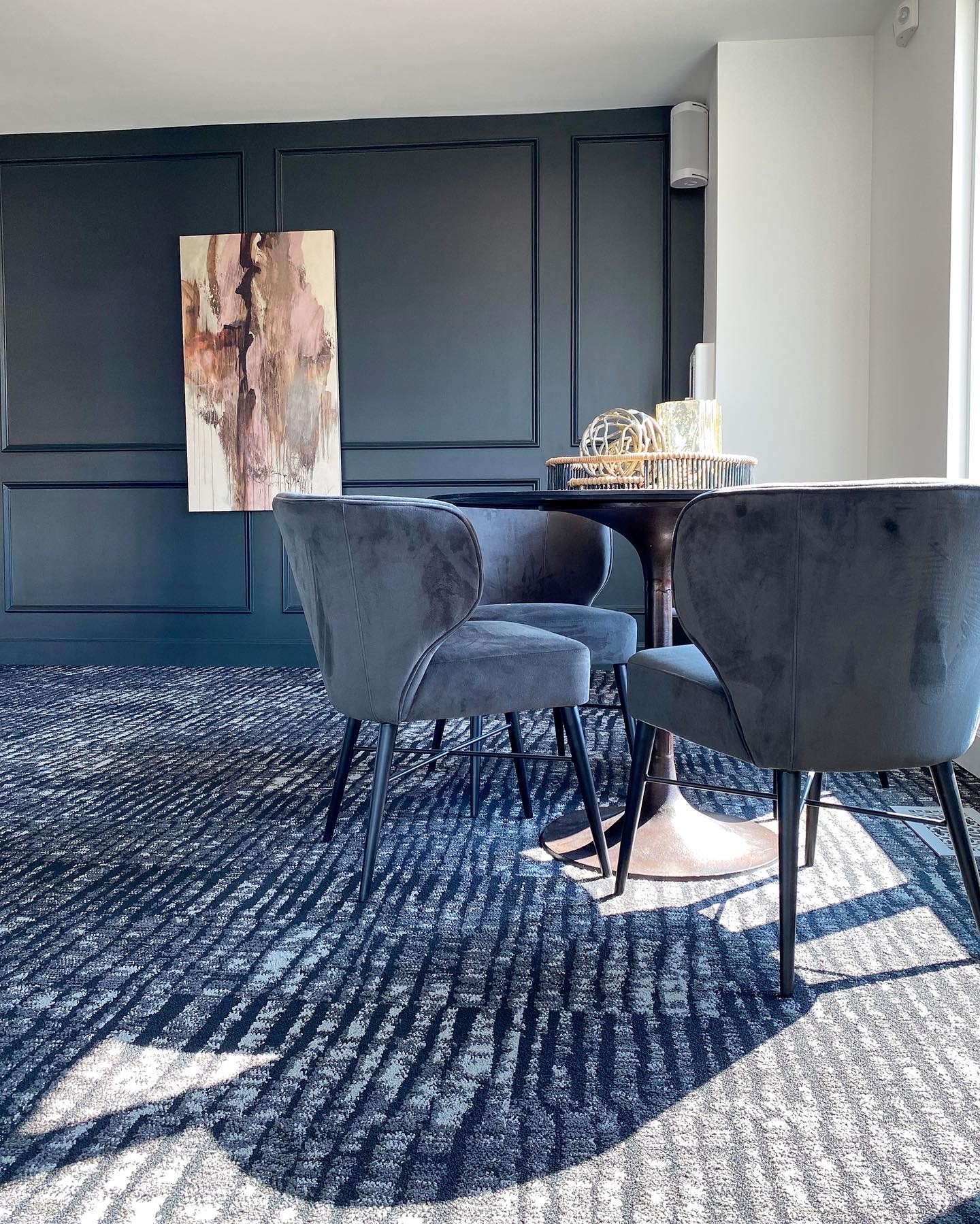
The design options available in today's carpet market are considerably broader than those available even ten years ago. Texture, pattern, color, and pile height options allow carpet to complement virtually any interior design direction, from clean and contemporary to warm and traditional. The assumption that carpet limits design options is simply inaccurate when working with a supplier that offers a strong product selection.
At C.S. Brown, we work with contractors and builders who understand that the best flooring recommendation is the one that genuinely serves the project, not the one that follows the trend. Our carpet selection is curated with the same attention to quality and performance that we apply to our tile, stone, and hardwood lines, because we know that a well-specified carpet in the right space is just as valuable as any other flooring choice on the job.
Our team is here to help you navigate product options, performance specifications, and application decisions so that every flooring recommendation you make is one you can stand behind. Whether you are specifying carpet for a single bedroom or an entire multi-unit project, we will make sure you have the right product for the job.
Ready to talk through your next project? Contact C.S. Brown today to connect with our team and explore our full flooring selection.